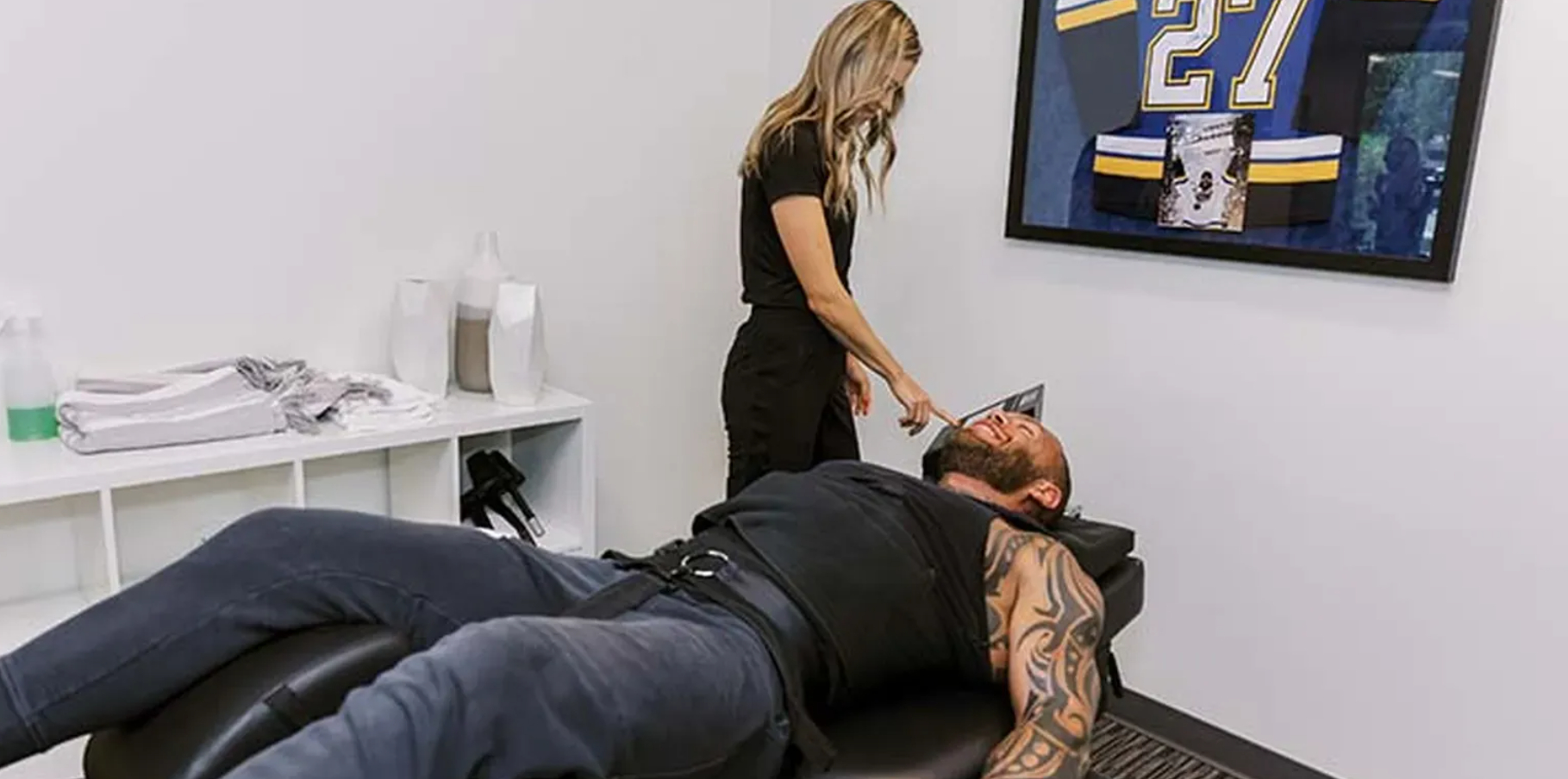
SPINAL DECOMPRESSION THERAPY

At FIX Medical Group in San Diego, California, the integrative health experts provide innovative care for a variety of spinal conditions treated with nonsurgical spinal decompression, helping to ease pain without surgery. They provide spinal decompression therapy to help those suffering from chronic back pain. Call the FIX Medical Group office nearest you today or schedule an appointment online to learn how spinal decompression therapy can provide chronic low back pain relief in San Diego.

SERVING THE GREATER SAN DIEGO COUNTY AREA

SAN DIEGO: MISSION VALLEY, & RANCHO BERNARDO, CA

DURATION

1.5 Hours

NEED APPOINTMENT?

Yes

PRICE

$199

LEAVE A MESSAGE

What is spinal decompression therapy?

Spinal decompression therapy treats back pain by gently stretching the spine to relieve pressure on the nerves, reducing discomfort.

Your spine is a tower of bones called vertebrae separated by discs. The discs cushion the bones and absorb shock. The vertebrae protect your spinal cord and serve as an exit point for the nerves that go out to the rest of your body.

You can develop back pain from many causes. However, changes to the structure of your spine can compress (pinch) or irritate the nerves, resulting in pain.

Sciatica is lower back pain often caused by a herniated disc or bone spurs that compress the sciatic nerve root as it exits the lumbar (lower back) spine. Non-surgical herniated disc treatment can help relieve pressure on the sciatic nerve and reduce pain.

Am I a candidate for spinal decompression therapy?

The FIX Medical Group team collaborates with you to create a personalized treatment plan. Together, you determine if chiropractor spinal decompression is right for you. All treatment recommendations are made after an initial consultation.

You might benefit from the nonsurgical treatment if you have:

  • Lower back pain
  • Sciatica
  • Pain that radiates into the arm or leg
  • Neck pain
  • Spinal stenosis (narrowing of the spinal canal)
  • Pinched (compressed) nerves
  • Herniated discs

These conditions are a common source of chronic pain. This pain isn’t normal, and it’s not something you need to accept and live with. FIX Medical Group offers many innovative treatments for chronic pain conditions, like spinal decompression therapy.

They partner with you to give you the tools you need to manage your health and wellness independently.

What happens during spinal decompression therapy?

Non-surgical spinal decompression therapy is part of chiropractic care. Your chiropractor lets you know what you can expect during your therapy at your consultation

While you lie on the motorized traction table, your chiropractor places a harness around your hips. During therapy, the bottom half of the traction table slides back and forth while the top half remains stationary.

This gentle back-and-forth stretching creates negative spinal pressure, allowing any herniated or bulging discs to move back into place. As part of spine disorders treatment, the gentle stretching also improves circulation to the spine, increasing the delivery of oxygen and nutrients needed to help heal damaged discs.

You might need a series of spinal decompression therapy sessions to gain the most benefits.

Are you looking for nonsurgical sciatica treatment in San Diego to relieve your back pain? Call Fix Medical Group today or schedule an appointment online to learn more about spinal decompression therapy and how it can help.

Frequently Asked Questions About Spinal Decompression Therapy

How many spinal decompression sessions are usually needed?

There is no universally established number of spinal decompression sessions that works for every patient.

Treatment frequency depends on the cause of your symptoms, how long you’ve been hurting, your physical examination, your response to treatment, and whether decompression is being combined with rehabilitation or other care.

Some clinics use multi-week treatment schedules, but research protocols vary considerably. At FIX Medical Group, your progress should determine whether treatment continues, changes, or stops rather than automatically completing a predetermined number of visits.

How soon can you feel results from spinal decompression therapy?

Some patients report symptom changes within the first several spinal decompression sessions, while others improve more gradually or don’t respond enough to justify continuing treatment.

Research on mechanical traction suggests that selected people with lumbar radiculopathy, meaning irritation of a lumbar nerve root, may experience short-term improvements in pain and disability when traction is added to physical therapy. Evidence remains mixed, however, and not every type of back pain responds the same way.

At FIX Medical Group, we look for meaningful changes in pain, mobility, function, and activity tolerance rather than promising improvement after a specific number of visits.

Is spinal decompression therapy painful?

Spinal decompression is generally intended to feel like a controlled, gradual stretch rather than a forceful manipulation.

You may feel tension or stretching through the back or neck during treatment. Significant or worsening pain isn’t something you should simply push through.

Tell your provider if treatment increases radiating pain, numbness, tingling, weakness, or other unusual symptoms so the settings or treatment plan can be reassessed.

Can spinal decompression help with a bulging disc?

Spinal decompression may be considered as part of conservative treatment for some patients whose symptoms are associated with a bulging or protruding disc, particularly when nerve irritation is involved.

However, a bulging disc on an MRI doesn’t automatically explain someone’s pain. Disc changes are common, and the symptoms, neurological examination, movement findings, and overall clinical picture matter.

Spinal decompression also shouldn’t be marketed as physically “putting the disc back in place.” The clinical goal is symptom and functional improvement, not guaranteeing a change in disc anatomy.

Can spinal decompression help with degenerative disc disease?

Spinal decompression may be considered for selected patients with pain occurring alongside degenerative disc changes, but degenerative disc disease alone doesn’t tell us whether traction will help.

Age-related disc changes are common, including in people who aren’t experiencing significant pain.

A provider should first determine whether your symptoms are likely related to the spine, nerve irritation, muscular or joint factors, or another cause. Treatment may then combine decompression with exercise, rehabilitation, mobility work, or other conservative approaches.

Is there downtime after spinal decompression therapy?

Spinal decompression is non-surgical and generally doesn’t require a formal recovery period after an uncomplicated session.

Many patients can return to normal daily activity right away, although your provider may recommend temporarily modifying activities that aggravate your condition.

If you’re receiving decompression because of a disc-related problem, sciatica, or another spinal condition, what you do between appointments can be just as important as the treatment itself. Exercise, movement, posture, loading, and rehabilitation may all be part of the plan.

Can spinal decompression be combined with chiropractic care in San Diego?

Yes, spinal decompression may be combined with chiropractic care for selected patients when both are appropriate.

At FIX Medical Group in San Diego, the advantage of an integrated approach is that decompression doesn’t have to stand alone. Depending on the diagnosis, care may also include chiropractic treatment, physical rehabilitation, mobility work, strengthening, and changes to activities that continually aggravate the problem.

Using more treatments isn’t automatically better. Each part of the plan should have a reason for being there.

Can spinal decompression be an alternative to surgery for back pain?

Spinal decompression may be one non-surgical treatment option for certain patients, but it shouldn’t be presented as a replacement for every type of spine surgery.

Many people with back pain can appropriately begin with conservative care. However, severe neurological compression, progressive weakness, spinal instability, certain fractures, cauda equina syndrome, or other serious problems may require urgent medical or surgical evaluation.

The goal at FIX Medical Group is to determine which level of care your condition actually requires.

Who should not get spinal decompression therapy?

Spinal decompression isn’t appropriate for everyone.

Contraindications and precautions vary by technique and equipment, but additional medical evaluation may be necessary for people with conditions such as:

  • Certain fractures
  • Severe osteoporosis
  • Spinal instability
  • Certain tumors or infections
  • Recent spine surgery
  • Significant or progressive neurological deficits
  • Pregnancy, depending on the treatment area and equipment
  • Other conditions where traction may be unsafe

Your medical history and examination should be reviewed before starting treatment.

How long does a spinal decompression session take?

A spinal decompression appointment commonly takes approximately 20 to 45 minutes, although treatment time varies by equipment, treatment area, patient tolerance, and the rest of your care plan.

Your visit may also include rehabilitation, movement work, chiropractic care, or another treatment when appropriate.

Ask your FIX Medical Group provider what your specific appointment will involve rather than assuming every session is the same.

What does spinal decompression therapy feel like?

Most patients describe spinal decompression as a gradual stretching or pulling sensation through the treated portion of the spine.

The treatment is controlled and doesn’t involve the sudden thrust commonly associated with certain chiropractic adjustments.

Some people find it relaxing. Others may notice temporary tightness or soreness afterward.

If symptoms begin traveling farther into an arm or leg, weakness develops, or discomfort becomes significant, tell your provider.

Can spinal decompression help with sciatica?

It may help selected patients with sciatica, particularly when symptoms involve lumbar nerve root irritation associated with certain disc problems.

Research suggests mechanical traction added to physical therapy can provide short-term pain and disability improvements for some patients with lumbar radiculopathy, although the evidence is not strong enough to say everyone with sciatica should receive traction. 

Sciatica is a symptom pattern, not one diagnosis. A proper examination should determine why the sciatic nerve pathway is being irritated before deciding whether decompression belongs in the treatment plan.

Can spinal decompression help with neck pain?

Cervical traction or decompression may be considered for selected cases of neck pain, especially when symptoms involve nerve irritation extending into the shoulder, arm, or hand.

Not every case of neck pain comes from disc or nerve compression, though.

Muscles, joints, posture, previous injury, cervical nerve roots, and other structures can all contribute. Your provider should determine the likely cause before recommending cervical decompression.

Can spinal decompression help with a herniated disc?

Some patients with symptomatic herniated discs may be candidates for spinal decompression or mechanical traction as part of conservative care.

The objective is to reduce symptoms and improve function. It shouldn’t be described as guaranteed to “retract,” “heal,” or physically reposition a herniated disc.

Clinical response matters more than a marketing diagram of a disc being pulled back into place.

What should I expect after spinal decompression therapy?

Most people can resume normal daily activities after spinal decompression.

You may feel looser, unchanged, or temporarily mildly sore after a session. Your provider may also recommend specific exercises, posture changes, activity modifications, or rehabilitation between visits.

Improvement should eventually show up where it matters: walking, sitting, sleeping, exercising, working, or doing the activities that pain had been limiting.

Is spinal decompression therapy safe?

Spinal decompression is a non-surgical treatment, but that doesn’t make it appropriate or risk-free for every patient.

A thorough history and examination help identify people who shouldn’t receive traction and allow the provider to select appropriate settings.

Treatment should be stopped or reassessed if you develop significant worsening pain, progressive weakness, increasing numbness, or other concerning neurological symptoms.

Does spinal decompression really work?

The most accurate answer is sometimes, for the right patient.

Research on traction has produced mixed findings. Certain studies suggest short-term benefits for people with lumbar radiculopathy, particularly when traction is combined with physical therapy. Other evidence hasn’t found consistent benefits across broader groups of patients with low back pain.

WHO specifically recommends against using traction routinely for chronic primary low back pain, which is different from saying traction can never help a selected patient with radicular symptoms.

That’s why diagnosis and patient selection matter.

Does spinal decompression create negative pressure inside the discs?

You’ll often see spinal decompression marketed with claims that it creates negative intradiscal pressure and “pulls herniated material back into place.”

Those mechanical theories have been studied, but they shouldn’t be treated as proof that a patient’s disc is being structurally repaired during treatment.

For patients, the more meaningful question is whether treatment safely improves pain, neurological symptoms, mobility, and function.

When should back pain be evaluated urgently instead of treated with decompression?

Seek prompt medical evaluation for back pain accompanied by symptoms such as:

  • New loss of bladder or bowel control
  • Numbness in the saddle or groin area
  • Significant or progressive leg weakness
  • Severe symptoms following major trauma
  • Fever or signs of serious infection
  • Other rapidly worsening neurological symptoms

Those are not situations where someone should simply schedule a routine decompression session.

×