
ACTIVE RELEASE TECHNIQUE
When you can’t get relief from the ongoing pain of an overuse injury, it’s time to consider the active release therapy (ART®) in San Diego. The certified active release technique therapists providers at FIX Medical Group have extensive experience targeting the source of your pain and implementing a personalized ART protocol that eases your symptoms. The only thing better than pain relief is getting that relief in a few short ART sessions. Use the online booking feature today or call the nearest FIX Medical Group office in San Diego, California to schedule your ART consultation.
SERVING THE GREATER SAN DIEGO COUNTY AREA
SAN DIEGO: MISSION VALLEY, & RANCHO BERNARDO, CA
DURATION
1.5 Hours
NEED APPOINTMENT?
Yes
PRICE
$199
LEAVE A MESSAGE
What is the active release technique?
Active Release Therapy is a hands-on treatment that identifies adhesions causing your pain, then uses specific movements to release them, easing discomfort and restoring function. With Active Release Therapy in San Diego, adhesions are treated where scar tissue forms in muscles, ligaments, tendons, and fascia (the sheet of connective tissue covering muscles and organs).
Scar tissue develops as soft tissues heal from injuries. In some cases, scar tissue forms between two surfaces, causing them to stick together — that’s an adhesion.
Adhesions become a source of pain and immobility. ART releases the adhesions, restoring movement.
When would I need the active release technique?
FIX Medical Group tailors ART to treat adhesions in any part of your body. They often treat adhesions from overuse injuries suffered when athletic, work, and everyday activities require repetitive movement.
They frequently use ART for athletes anxious to recover and return to play. But anyone who hasn’t been able to get pain relief through conventional therapy might improve with ART. Your FIX Medical Group provider lets you know if ART is a good choice after completing a physical exam.
What happens during an active release technique session?
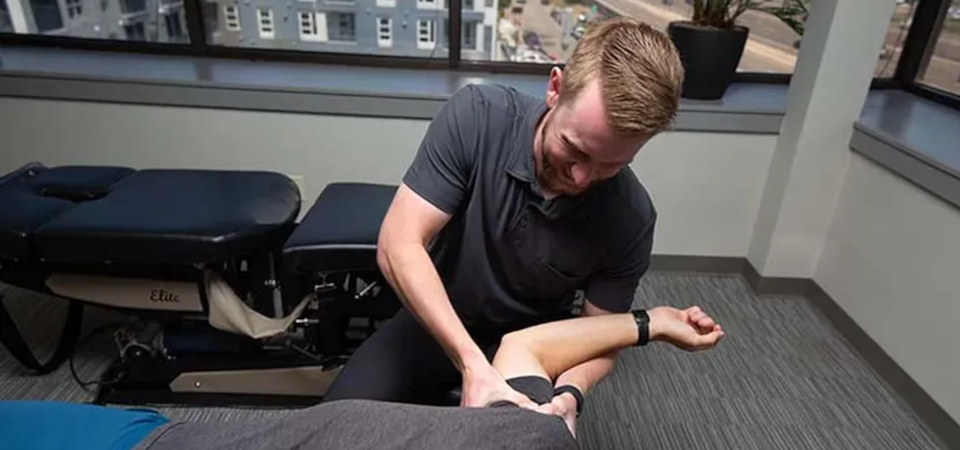
For the first step, your certified ART provider at FIX Medical Group uses a hands-on diagnostic technique. They touch areas around your pain, gently pushing with their hands to find the damaged soft tissues.
After identifying the problem, the active release technique specialist determines the specific movement needed to release the affected tissues. At FIX Medical Group in San Diego, our providers have hundreds of different movements they can use to customize each person’s treatment.
ART treatments combine specific patient positions and movements with manual pressure from your provider. They explain the position you need to take and the movement to make while they stretch and manipulate the damaged tissues.
As you move, they can feel the targeted adhesion, allowing them to treat the restricted soft tissues more precisely.
How many active release technique sessions will I need?
ART sessions typically last 15 minutes. Most patients notice a significant difference after their first treatment. However, achieving the best results usually takes up to five sessions.
Call FIX Medical Group today or use the online booking feature if you have questions or want to schedule a consultation.
Frequently Asked Questions About Active Release Technique
What Is the Difference Between Active Release Technique and Deep Tissue Massage?
Active Release Technique (ART) is a targeted soft-tissue treatment that combines specific manual pressure with active or passive movement, while deep tissue massage generally uses broader pressure and massage techniques across muscles and connective tissue.
During ART, the provider identifies a specific muscle, tendon, fascia, or other soft-tissue structure and applies tension while moving the area through a controlled range of motion. The treatment is typically more problem-focused than a general massage.
Deep tissue massage may be useful for broader muscle tension and relaxation. ART is generally selected when a provider identifies a particular soft-tissue restriction or movement problem that may be contributing to symptoms.
At FIX Medical Group in San Diego, the choice isn’t based on which technique sounds more aggressive. It’s based on what the examination suggests is actually contributing to your problem.
Is Active Release Technique Painful?
Active Release Technique can cause temporary pressure, pulling, stretching, or tenderness, but treatment shouldn’t require you to endure severe pain.
Sensitive or irritated tissue may feel uncomfortable as pressure and movement are combined. Your provider can modify the pressure, position, or technique based on your response.
More pain doesn’t mean better treatment. Communication is important, particularly when treating an acute injury or an already sensitive area.
Can Active Release Technique Help With Chronic Back and Neck Pain?
Active Release Technique may help some people with chronic neck or back pain when muscular tension, repetitive strain, or restricted soft-tissue movement contributes to the problem. It isn’t appropriate for every cause of spinal pain.
Long hours at a desk, repetitive work, training, previous injuries, and altered movement patterns can all contribute to muscle and soft-tissue discomfort. However, back and neck pain can also involve joints, discs, nerves, inflammatory conditions, or other problems that ART alone won’t correct.
That’s why evaluation matters.
At FIX Medical Group, ART may be incorporated into a broader plan with chiropractic care, mobility work, corrective exercise, rehabilitation, or other treatments when clinically appropriate.
How Much Does Active Release Technique Cost in San Diego?
The cost of Active Release Technique in San Diego varies based on the provider, appointment type, number of areas treated, and whether ART is performed by itself or incorporated into a broader treatment visit.
Insurance coverage also varies. Depending on your health plan and how the service is provided, some or all of the visit may be covered, while other treatment may be self-pay.
Before beginning care, ask about the cost of the initial evaluation, follow-up treatment, expected number of visits, and insurance or self-pay options. FIX Medical Group can help you understand expected costs before beginning your treatment plan.
Who Is a Good Candidate for Active Release Technique?
Active Release Technique may be appropriate for people experiencing soft-tissue tightness, restricted movement, repetitive strain, or certain sports and overuse injuries.
Potential candidates include active adults, athletes, desk workers, and people whose work involves repetitive movements. Common complaints may involve the neck, shoulders, back, hips, legs, elbows, or other areas where muscle and soft-tissue restrictions affect comfortable movement.
ART isn’t automatically appropriate because an area feels “tight.” Persistent pain can come from muscles, tendons, joints, nerves, or other structures.
A proper evaluation helps determine what you’re treating before hands-on therapy begins.
What Should I Expect After an Active Release Technique Session?
After an ART session, you may notice temporary tenderness or soreness, and some people notice an immediate change in how freely the treated area moves. Individual responses vary.
Because ART combines pressure with movement of the targeted tissue, the area may remain sensitive for a short period afterward.
Your provider may recommend specific mobility exercises, corrective exercises, or temporary activity modifications based on the problem being treated. Significant or worsening pain, weakness, numbness, or other unusual symptoms should be reported rather than treated as a normal part of recovery.
Can Active Release Technique Help With Sports and Overuse Injuries?
Active Release Technique may be used as part of treatment for certain sports and overuse injuries involving muscles and other soft tissues, particularly when restricted movement or repetitive loading contributes to symptoms.
In San Diego, that might include problems associated with running, cycling, surfing, pickleball, golf, weight training, or repetitive occupational movements.
ART isn’t a replacement for rehabilitation. If a runner’s calf repeatedly becomes tight because it lacks strength for the mileage being demanded of it, repeatedly “releasing” the calf doesn’t solve the entire problem.
That’s why FIX Medical Group may combine hands-on treatment with strengthening, mobility work, load management, chiropractic care, and progressive return to activity when appropriate.
How Soon Can I Exercise After Active Release Technique?
Many people can return to normal daily activity immediately after Active Release Technique, but returning to strenuous exercise depends on the condition being treated and how you respond to treatment.
Someone receiving ART for mild muscle tightness may have few restrictions. Someone recovering from a sports injury may need a more gradual return to running, lifting, surfing, or other high-load activity.
A little post-treatment tenderness doesn’t necessarily mean something is wrong, but pushing aggressively through increasing pain isn’t the goal either. Follow the activity recommendations provided for your specific injury.
What Is Active Release Technique Used For?
Active Release Technique is used to address certain muscle and soft-tissue problems that may contribute to pain, tightness, restricted mobility, or difficulty performing specific movements.
ART may be considered when symptoms are associated with repetitive activity, sports, occupational movements, or previous injury. Treatment can target specific muscles, tendons, fascia, and related soft tissues based on the clinical examination.
Rather than assuming every painful area contains “scar tissue” that needs to be broken up, FIX Medical Group evaluates the movement and underlying condition first.
How Does Active Release Technique Work?
Active Release Technique combines targeted manual contact with movement of the affected body part through a specific range of motion.
Instead of applying pressure to a relaxed muscle alone, the provider maintains contact with a targeted soft-tissue structure while the patient or provider moves the area. The goal is to address relevant soft-tissue restrictions and improve comfortable movement.
ART should be viewed as one treatment tool, not a cure for every musculoskeletal problem.
What Conditions Can Active Release Technique Treat?
ART may be incorporated into care for certain muscle and soft-tissue complaints involving pain, tightness, restricted movement, or repetitive strain.
Depending on the diagnosis, ART may be considered as part of care for:
- Neck and shoulder tightness
- Back and hip muscle restrictions
- Repetitive strain problems
- Running and cycling-related soft-tissue complaints
- Certain sports and overuse injuries
- Muscle tightness following an injury
- Restricted movement associated with repetitive activity
Symptoms such as significant weakness, persistent numbness or tingling, severe swelling, traumatic injury, or worsening neurological symptoms deserve further evaluation rather than automatically being treated as a soft-tissue restriction.
How Many Active Release Technique Sessions Will I Need?
There is no standard number of ART sessions that everyone needs. Treatment frequency depends on the diagnosis, how long you’ve had the problem, its severity, your activity demands, and how you respond to care.
A relatively new movement restriction may respond differently from pain that has persisted for months or repeatedly returns during sport.
Progress should also be measured by meaningful changes in pain, mobility, strength, function, and activity tolerance rather than simply completing a predetermined number of visits.
How Quickly Does Active Release Technique Work?
Some patients notice changes in tenderness or mobility after an ART session, but lasting improvement depends on the underlying condition and usually shouldn’t be judged by a single treatment.
A temporary increase in range of motion is different from fully correcting the reason an injury keeps returning.
For recurring problems, the bigger goal is to restore enough mobility, strength, and tissue capacity to tolerate normal work, exercise, or sport without repeatedly flaring the same area.
Is Active Release Technique the Same as Myofascial Release?
No. Active Release Technique and myofascial release are both hands-on soft-tissue approaches, but their techniques are different.
ART typically combines targeted contact with movement through a specific range. Myofascial release is a broader term that can describe techniques using sustained pressure or stretching directed at fascia and surrounding soft tissues.
Neither technique is automatically superior. The more useful question is which approach, if either, makes sense for the problem identified during your examination.
Is Active Release Technique the Same as Chiropractic Care?
No. Active Release Technique and chiropractic care are different treatments, although they may be used together when appropriate.
ART primarily focuses on soft tissues such as muscles, tendons, and fascia. Chiropractic care may include evaluation and treatment of joint mobility, spinal or extremity function, and other musculoskeletal factors.
At FIX Medical Group, treatments can be combined when each addresses a relevant part of the patient’s condition rather than adding therapies simply for the sake of doing more.
Is Active Release Technique Good for Athletes?
ART may be useful for athletes when soft-tissue restrictions, repetitive loading, or movement limitations are contributing to pain or reduced function.
San Diego runners, surfers, cyclists, golfers, pickleball players, recreational athletes, and people who lift regularly place very different demands on their bodies. Treatment should account for those demands.
The goal isn’t simply to make a muscle feel looser on the treatment table. It’s to help restore the movement and function required for the activity you actually want to return to.
Can Active Release Technique Break Up Scar Tissue?
You’ll often hear ART described as a treatment that “breaks up scar tissue,” but that description oversimplifies what happens biologically.
Manual therapy may influence pain, mobility, tissue tolerance, and how a person moves, but scar tissue isn’t simply being physically broken apart by a provider’s hands.
For E-E-A-T, I strongly prefer this explanation over making the common marketing claim that ART literally destroys adhesions or scar tissue. It’s more medically defensible and makes FIX sound like the clinic that understands the treatment rather than simply repeating the industry’s sales language.
Can Active Release Technique Help Sciatica?
ART may help address muscular or soft-tissue factors occurring alongside some cases of sciatic-type pain, but it doesn’t treat every cause of sciatica.
Pain traveling from the lower back or buttock into the leg can have several causes, including irritation or compression involving spinal nerve roots. Numbness, tingling, progressive weakness, or significant radiating pain should be properly evaluated before assuming a tight muscle is responsible.
If soft-tissue restrictions are part of the problem, ART may be one component of a broader treatment and rehabilitation plan.
Should I Choose Active Release Technique or Massage for Muscle Tightness?
Massage may be appropriate when your primary goal is general muscle tension or relaxation, while ART is generally more targeted toward a specific soft-tissue or movement problem.
If the same muscle keeps becoming tight every time you run, lift, work, or play a sport, simply making it feel looser may not be enough.
At FIX Medical Group, we look at why the tissue keeps becoming irritated or restricted, then determine whether ART, rehabilitation, chiropractic care, strength work, another treatment, or a combination makes the most sense.
